
What is stone veneer?
“What is stone veneer?” In short: a facing of stone that is much thinner than a structural stone wall. Natural thin veneer is real stone cut thin; manufactured stone veneer is cast concrete coloured to look like stone. Both are lighter than full-bed stone, which lets them go on walls that could not carry solid masonry. Neither carries load; they depend on the wall behind them.
Adhered vs anchored veneer
There are two broad installation methods, and the stone, its weight and the wall decide which applies.
| Adhered veneer | Anchored veneer | |
|---|---|---|
| How it is held | Bonded with mortar to a scratch coat over lath (or a suitable masonry surface) | Tied back to the structure with anchors, often on a ledge or support |
| Typical stone | Manufactured stone and natural thin veneer | Thicker natural stone |
| Weight on the wall | Lighter; still adds significant load | Heavier; usually needs its own support |
| Review | Wall and substrate checked against the product requirements | Structural review of support and anchorage |
Substrate and weight
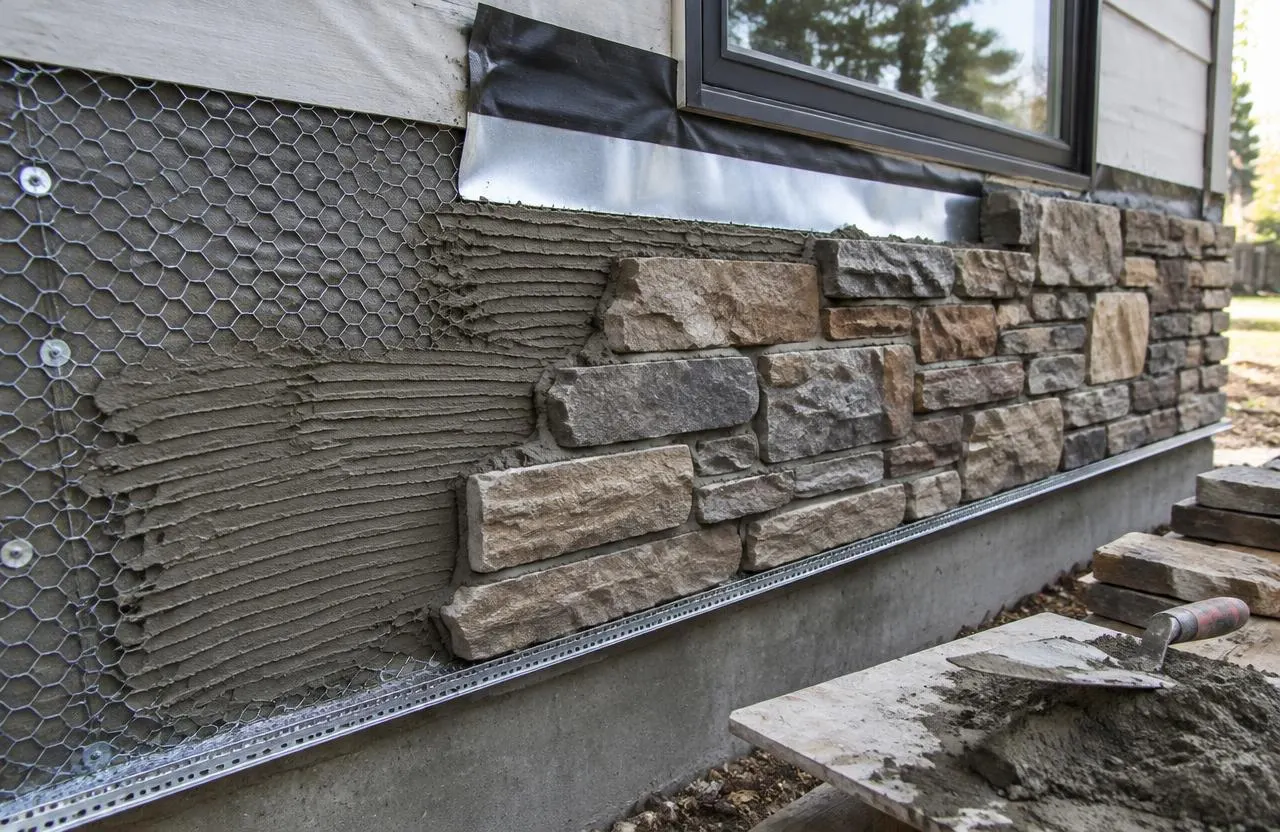
Adhered veneer is heavy compared with siding, and the wall has to carry it without movement. On wood-framed walls, the sheathing, barrier and lath are installed to the manufacturer’s requirements before the scratch coat. On sound brick or concrete, veneer can sometimes be applied directly once the surface is clean and suitable. Not every wall can carry stone, so the substrate and the product requirements are checked, and heavier or anchored veneer goes to structural review.
Drainage and flashing on exterior walls
Mortar and stone absorb water, and water that gets behind veneer needs a way out. Exterior veneer installations typically include a water-resistive barrier, a drainage path behind the stone, flashing above windows and doors and at roof-wall junctions, and a weep screed at the bottom kept clear of soil, mulch and paving so the wall can drain. Veneer taken down to grade with no clearance is a common cause of moisture damage.
Can stone veneer be installed over brick?
Often, if the brick is sound, clean and free of coatings, and the stone manufacturer allows direct application or the surface is prepared with lath and a scratch coat. Painted or sealed brick usually needs preparation for the mortar to bond. The brick’s own weep holes and flashing must not be covered. We assess the specific wall before recommending a method.
Fireplace surrounds
Indoors, stone veneer is popular around fireplaces. The considerations are different: the wall framing and backing must carry the weight, and the manufacturer’s clearances for the fireplace or insert govern how close combustible materials and finishes can be to the firebox. A gas insert and its venting are installed by a TSSA-registered fuels contractor that you contract directly; the veneer is planned around that contractor’s and the manufacturer’s requirements, not added on afterwards.
Natural vs manufactured stone
Natural thin veneer offers real stone colour and texture that does not fade, at a higher material cost. Manufactured stone is consistent, lighter and less expensive, but its colour is a surface treatment and cut edges need care. Both need exterior-rated products for Ottawa freeze-thaw exposure.
What shapes stone veneer cost
Cost depends on wall area and height, natural versus manufactured stone, corners and returns, the substrate preparation needed, flashing and trim details, scaffolding and access, and removal of existing cladding.
Common questions
What is stone veneer?
A thin facing of natural or manufactured stone applied to a wall for the look of masonry. It does not carry load.
Can stone veneer be installed over brick?
Often, if the brick is sound, clean and uncoated and the stone manufacturer’s requirements are met. Weep holes and flashing in the brick must stay clear.
How is stone veneer installed on an exterior wall?
Over a water-resistive barrier and lath with a scratch coat, with flashing above openings, a drainage path and a weep screed at the base clear of grade, following the product instructions.
Can stone veneer go on a fireplace?
Yes, if the wall can carry the weight and the fireplace manufacturer’s clearances are respected. A gas insert is installed by a TSSA-registered fuels contractor you contract directly, not through GCO.
Is stone veneer the same as stone masonry?
No. Veneer is a thin facing on another wall; stone masonry builds walls, foundations or features from full-thickness stone.