
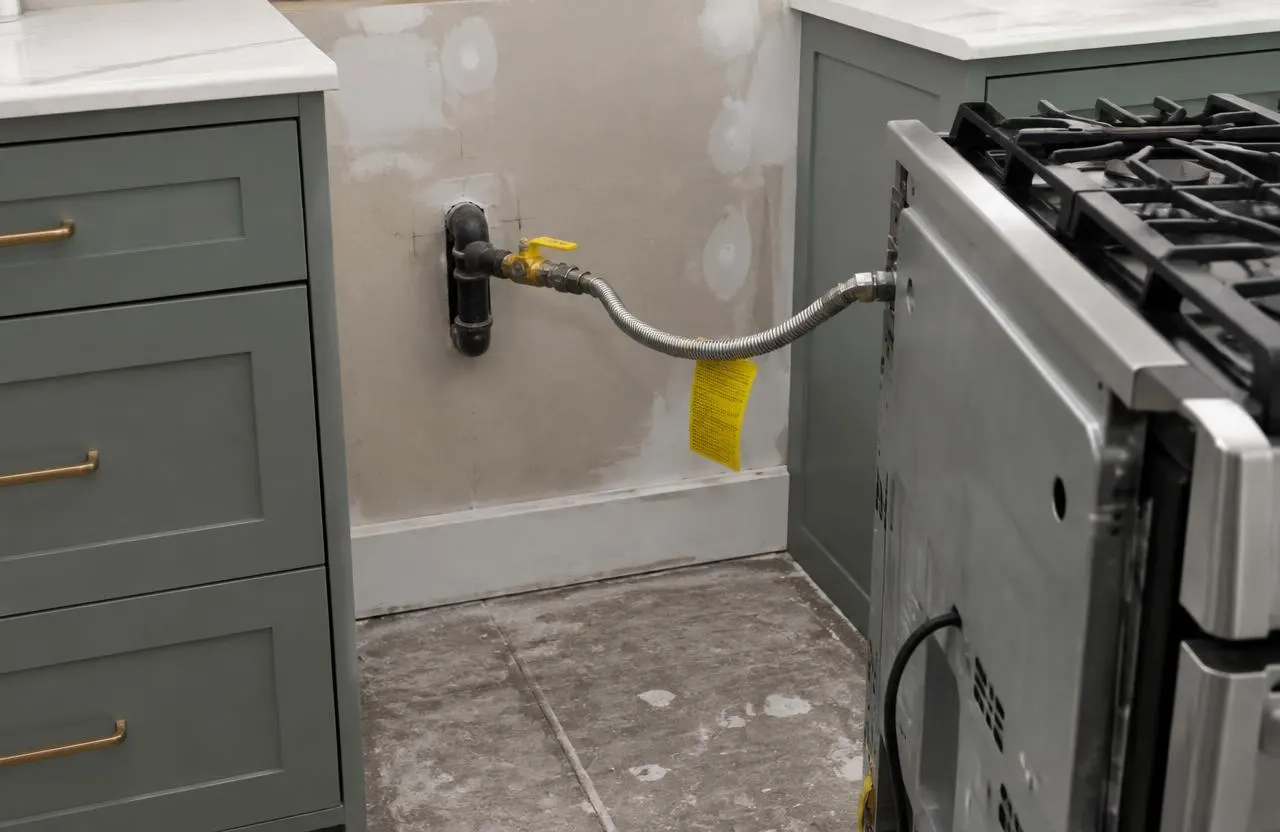
Who can do gas work in Ontario
The Technical Standards and Safety Authority (TSSA) states that registered fuels contractors are the only businesses legally authorised to do fuels-related work in Ontario, and that they must use properly trained and certified technicians. TSSA also explains that a business which agrees to do fuels work for a customer and then subcontracts it must itself meet the registration and certification requirements.
GCO does not hold a fuels contractor registration. That is why the gas portion of a project is never part of a GCO contract: you engage a registered fuels contractor directly, and GCO’s proposal covers only the renovation around it. TSSA’s public registry lets you find or verify a fuels contractor’s registration before you hire.
How the work is divided on a renovation
When a renovation includes a gas appliance, there are two separate agreements, each with you.
- You choose and contract a TSSA-registered fuels contractor for the gas scope; its quote, contract and invoice are with you.
- The fuels contractor determines whether the meter and piping can supply the added load, the pipe route, and the venting and combustion air the appliance needs.
- The fuels contractor supplies the piping and fittings, performs and tests its work, and arranges any inspection that work requires.
- GCO plans and builds only the surrounding work — openings, chases, framing, cabinetry, and wall and floor finishes — to the fuels contractor’s written requirements.
- GCO’s proposal and invoices exclude gas work; GCO does not mark up, supervise or subcontract it.
Can a homeowner or plumber install a gas line?
These are common questions. Under TSSA’s framework, gas work is done by registered fuels contractors employing certified technicians. A plumbing business can do gas work only if it holds the appropriate fuels registration and its technicians hold the gas certification for that work, so check the registry before hiring.
Renovations that often involve gas work
Gas work usually arrives as part of a larger project. In each case below, the gas portion is contracted separately with your fuels contractor; GCO’s part is the renovation around it.
- A gas range or cooktop in a kitchen renovation
- A gas fireplace or insert, with venting through a wall or roof
- A new or relocated furnace or water heater
- A dryer connection in a relocated laundry
- A barbecue or patio heater line on a deck or patio
- Shutting off and capping lines before demolition
Designing the renovation around gas requirements
The fuels contractor’s answers shape the renovation: a fireplace vent location affects the exterior wall and finishes, and a range line has to arrive where the cabinets put it. Ask your fuels contractor early for its requirements — vent terminal location, appliance clearances, pipe route and the access it needs. GCO plans openings, chases, cabinetry and finishes to those written requirements, so the design does not have to change later.
Testing before walls close
Your fuels contractor tests its piping before appliances are connected and is responsible for the requirements that apply to its work. On our side, insulation and drywall in the affected area stay open until you confirm the fuels contractor has finished and tested, so its piping is still accessible.
Electrical and other trades
Many gas appliances also need power for igniters, fans and controls. Electrical work is performed by a licensed electrical contractor; ESA notes that general contractors cannot do electrical work in homes unless they hold an electrical contractor’s licence, and that a homeowner hiring a general contractor should confirm a licensed subcontractor will do the electrical work.
What shapes the cost
Gas work is quoted by the fuels contractor you hire. Its price depends on the length and route of the line, the number of appliances, whether the meter or main line needs upgrading, and venting for the appliance. GCO’s proposal covers the surrounding renovation separately: access through finished walls and floors, cabinetry and framing, and restoring finishes afterward.
Common questions
Is GCO a TSSA-registered fuels contractor?
No. GCO does not hold a TSSA fuels contractor registration, so it does not supply, design, contract, subcontract or perform gas work. You hire a registered fuels contractor directly for that scope.
Can GCO include the gas work in its contract?
No. The gas portion is contracted between you and a TSSA-registered fuels contractor, who quotes, performs, tests and invoices it. GCO plans and builds the surrounding renovation to that contractor’s requirements.
Can a homeowner install a gas line in Ontario?
TSSA’s framework requires fuels work to be done by registered fuels contractors using certified technicians.
Can a plumber install a gas line?
Only if the business holds the appropriate TSSA fuels registration and its technicians hold the gas certification for that work. Check the registry before hiring.
How do I check a contractor is TSSA registered?
Use TSSA’s public registry of fuels contractors, which lets you search by company name or authorization number.
Can a gas line be added for a barbecue or patio heater?
Often, depending on supply capacity and the route — your fuels contractor assesses that. GCO can plan any surrounding building work so the route it specifies stays accessible; a patio itself is built by a City-licensed hardscaping contractor.