
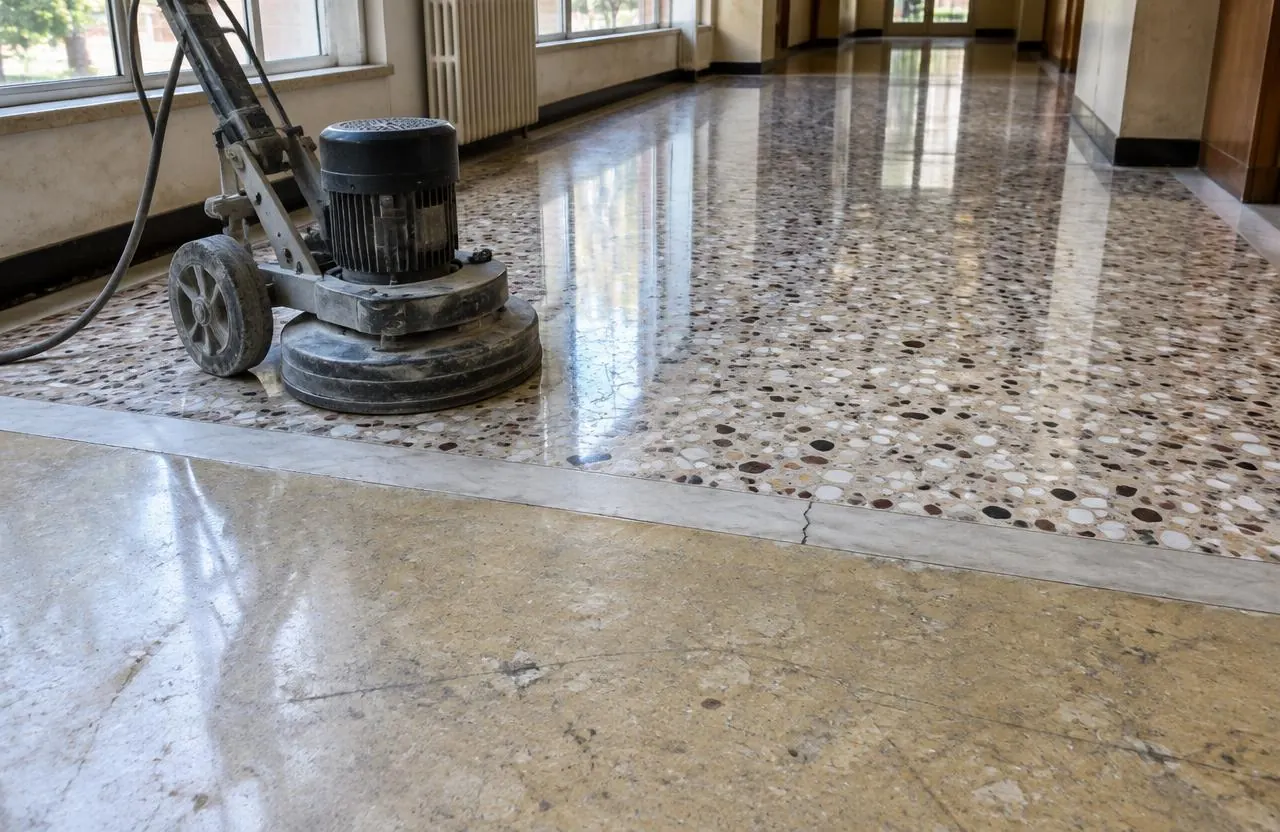
Assessing an old terrazzo floor
Restoration starts with understanding what the floor has been through. Many older terrazzo floors in Ottawa schools, offices, churches and mid-century homes have decades of wax, acrylic coatings or the wrong cleaners layered on top, which yellow and trap dirt.
- Coatings, wax or sealers on the surface
- Stains from rust, oil or acidic cleaners
- Cracks, especially along slab joints or divider strips
- Missing chips, pitting and voids
- Uneven areas or raised divider strips
- Previous patches in mismatched colours
- Whether the floor is cement or epoxy terrazzo
Restoration levels
Not every floor needs heavy grinding. Matching the method to the condition protects the terrazzo and controls cost.
| Approach | What it does | Suits |
|---|---|---|
| Strip and clean | Removes wax and coatings | Floors that are dull but not scratched |
| Honing | Fine abrasion to remove light scratches and etching | Worn traffic lanes, light damage |
| Grinding | Coarser abrasion to flatten and remove deeper damage | Uneven floors, lippage, deep scratches |
| Polishing and sealing | Progressively finer abrasion to the chosen sheen, then sealer | Final step for most restorations |
Terrazzo under carpet or tile
Some of the most rewarding restorations start with terrazzo hidden under carpet or vinyl tile. Removing the covering and adhesive reveals the floor, and test areas show how well it will come back.
Older vinyl tile, sheet flooring and black mastic adhesives can contain asbestos. They are assessed before removal begins, with testing or the appropriate controls where required. Ontario’s asbestos regulation (O. Reg. 278/05, section 10) sets owner duties before alteration or repair work is arranged: material likely to be disturbed is examined unless its asbestos content is already known or the work is planned as though it contains asbestos.
Cracks, chips and patches
Cracks are filled with a matching matrix and aggregate, and missing chips are replaced. Matching decades-old terrazzo exactly is difficult, so repairs aim to blend rather than disappear. Cracks that follow joints in the concrete slab may reappear because the slab continues to move; that limitation should be explained up front.
Water, slurry and dust control
Wet grinding creates slurry that must be contained, collected and disposed of properly rather than washed into drains. Dry processes need dust extraction. In occupied buildings, restoration is often phased by area or done after hours, with protected routes and signage.
Choosing the finish
A high polish shows the aggregate brilliantly but can be more slippery when wet and shows scratches sooner. A honed or satin finish is more forgiving in entrances and busy corridors. Penetrating sealers protect cement terrazzo from staining without forming a thick film.
Keeping it restored
Use neutral-pH cleaners, entry mats to catch grit and salt, and avoid acidic or harsh alkaline cleaners and wax build-up. Periodic light polishing and resealing keep the surface from sliding back into restoration territory.
What shapes terrazzo restoration cost
“How much does it cost to restore terrazzo floors?” varies with the floor’s condition and access.
- Floor area and layout
- Covering and adhesive removal, and any required examination
- Coating stripping and depth of grinding needed
- Crack, chip and patch repairs
- Finish level and sealer
- After-hours or phased work
Common questions
Can terrazzo be restored?
In most cases, yes. Stripping, honing or grinding, repairs and polishing can bring back a dull or damaged floor unless it is badly broken or too thin.
How do you restore old terrazzo floors?
Remove coatings, grind or hone to remove damage, fill cracks and voids, polish to the chosen finish and seal. Test areas confirm the method first.
How much does it cost to restore terrazzo floors?
It depends on area, condition, coverings to remove, repairs and finish level. A written proposal follows an on-site assessment.
Can I restore terrazzo floors myself?
Grinding and polishing terrazzo requires specialist equipment and slurry control, and older coverings may need an asbestos assessment before removal. It is generally a specialist job.
Will crack repairs be visible?
Repairs are colour-matched to blend, but perfect matches on older terrazzo are difficult. Cracks along slab joints can reappear.
Is terrazzo under my carpet worth uncovering?
Often. Test areas after removal show how well it will restore. Have older coverings and adhesives assessed for asbestos first.