
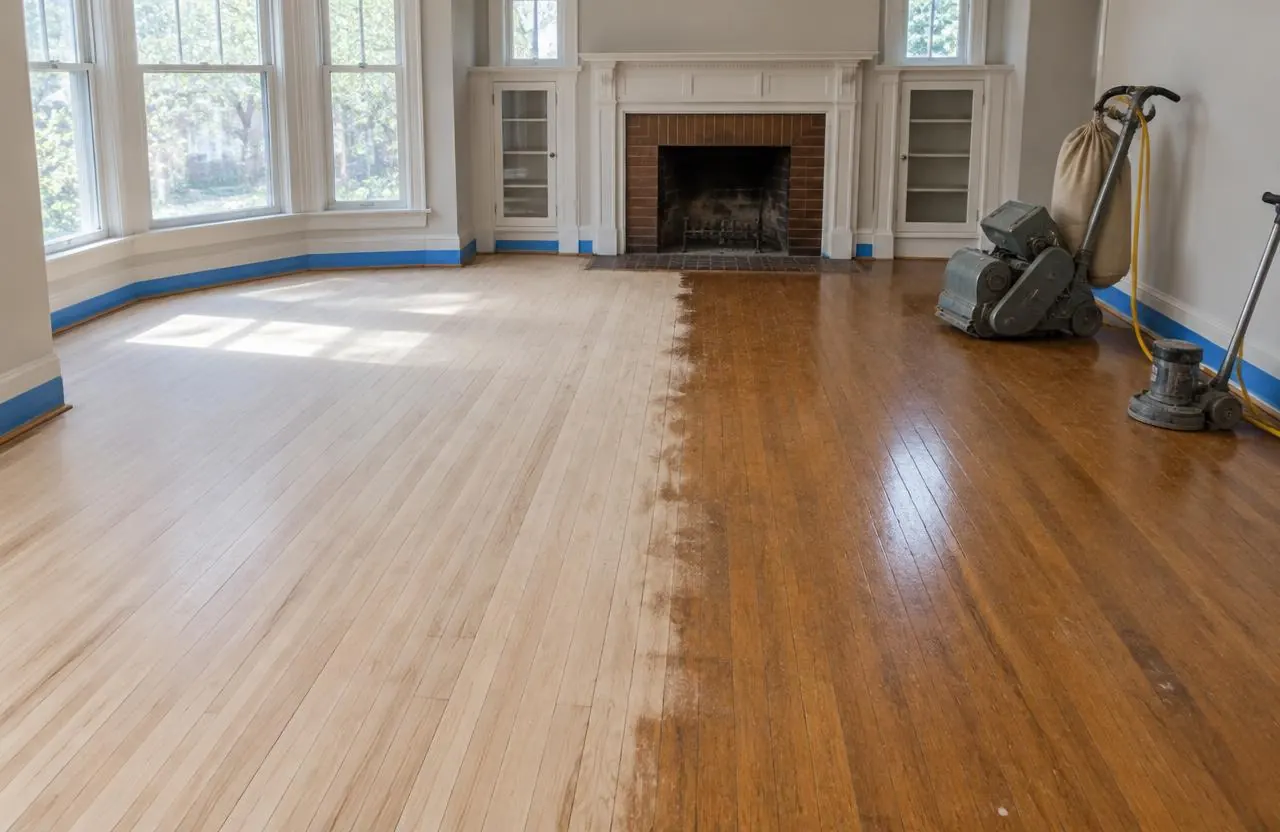
Full refinish, screen and recoat, or repair?
Not every tired floor needs sanding to bare wood. Matching the method to the problem saves time, wood and money.
| Approach | What it does | Suits | Does not fix |
|---|---|---|---|
| Screen and recoat | Lightly abrades the existing finish and adds a new coat | Dull, lightly scratched finish that has not worn through | Colour change, deep scratches, grey worn-through areas |
| Full sand and refinish | Removes the old finish and a thin layer of wood, then refinishes | Worn-through traffic paths, colour changes, deep scratches | Loose, cupped or severely damaged boards |
| Repair, then refinish | Replaces damaged boards before sanding the whole area | Pet stains, water-blackened boards, wall-removal gaps | Ongoing moisture problems |
Can your floor be sanded?
Each full sanding removes wood. Solid strip floors can usually be sanded several times, but older floors that have been sanded repeatedly can run out of wood above the tongue, exposing nails or the tongue itself. Engineered floors can only be sanded within the remaining wear layer; whether a full sand is possible depends on that thickness, earlier sanding, any textured surface and the manufacturer’s guidance, which are checked before work starts.
A floor register or a removed threshold often lets the remaining thickness be checked before committing.
How a full refinish works
A typical full refinish follows a predictable order, with each step affecting the next.
- Clear the rooms and protect adjoining spaces, vents and baseboards
- Set fasteners and make board repairs
- Sand the field with progressively finer grits, then edge along walls
- Fill gaps or cracks where appropriate
- Final sand and thorough dust removal
- Apply stain if chosen, after a test patch on the actual floor
- Apply sealer and finish coats with drying time between them
Choosing a finish
Water-based polyurethanes dry quickly, have lower odour and tend to stay clearer over time. Oil-modified polyurethanes add warmth and amber as they age and take longer to dry. Hardwax oils penetrate the wood for a low-sheen look and can be spot-repaired, but need periodic maintenance.
Sheen matters as much as type: matte and satin finishes hide scratches and dust far better than gloss in busy homes.
Stain and colour limits
Stain can change the floor’s look dramatically, but it cannot hide everything. Red oak’s pink undertones influence stain colours, maple can blotch with darker stains, and deep pet or water stains often remain visible because they go into the wood. Test patches on the sanded floor, viewed in daylight, are the only reliable preview.
Dust, odour and staying home
Modern sanding equipment with dust collection greatly reduces dust, but some fine dust still escapes, so doorways and vents are sealed off. During finishing, ventilation and staying off the floor matter. Many households stay elsewhere for part of the finishing days, especially with young children, pets or odour sensitivity.
Drying, curing and moving back in
Light foot traffic is usually possible once a coat is dry to the touch, but finishes keep curing for days afterward. Furniture should return with felt pads, lifted rather than dragged, and rugs typically wait longer so the finish can fully cure. Your proposal should state the expected sequence and when each room can be used.
What shapes refinishing cost
“How much does it cost to refinish hardwood floors?” depends on the condition and the extras.
- Total area and number of rooms, closets and hallways
- Stairs, which are slower and largely done by hand
- Board repairs and replacement before sanding
- Removing old coatings, wax or adhesive residue
- Stain versus natural finish, and the number of coats
- Finish type
- Moving furniture and protecting the home
Common questions
How much does it cost to refinish hardwood floors in Ottawa?
It depends on area, stairs, repairs, stain and finish type. GCO provides a written proposal after inspecting the floor and existing finish.
How long does hardwood floor refinishing take?
A typical project spans several days from sanding to final coat, plus curing time before rugs and heavy furniture return. Stairs, stain and repairs add time.
Can I stay home during refinishing?
Often during sanding, with the work area sealed. During finishing, many people stay elsewhere because of odour and the need to stay off the floor.
Is screen and recoat the same as refinishing?
No. A screen and recoat refreshes the existing finish without sanding to bare wood. It cannot change colour or remove deep scratches.
Can engineered hardwood be refinished?
Sometimes. It depends on how much wear layer remains, previous sanding, texture, condition and the manufacturer’s guidance. An on-site assessment comes first; some floors are only suitable for a screen and recoat.
Will refinishing remove pet stains?
Surface marks usually sand out. Deep stains that have soaked into the wood often remain, and replacing those boards before refinishing gives a better result.