
How engineered hardwood is built
Each plank has a top layer of real hardwood — the wear layer you see and walk on — bonded to a core of cross-laminated plies or a composite. Because the core layers run in different directions, the plank resists the swelling and shrinking that solid boards experience with humidity changes.
Quality varies widely. Two planks that look identical in a showroom can differ in wear-layer thickness, core construction, finish and the conditions the manufacturer allows.
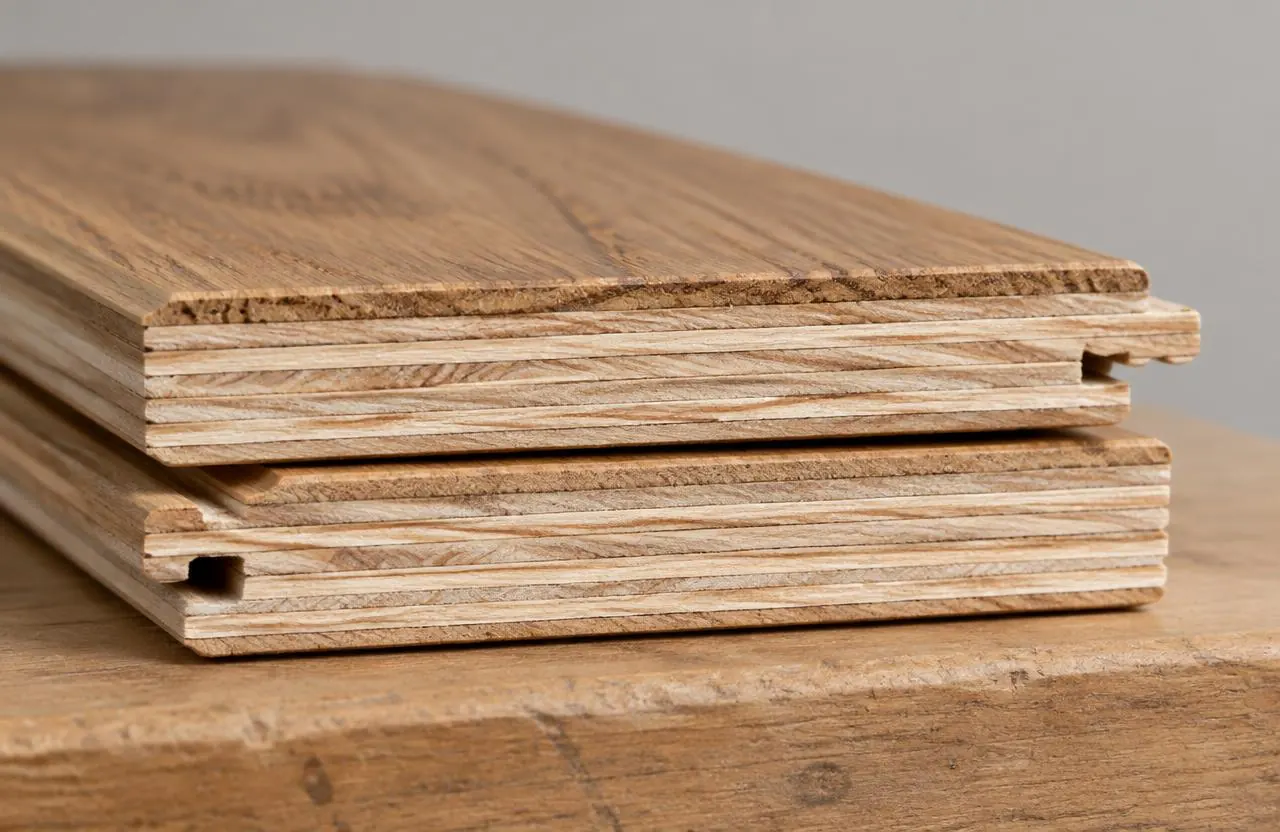
What to compare between products
Ask for the technical data sheet, not just the brochure. These details decide where the floor can go and how long it can last.
| Detail | Why it matters |
|---|---|
| Wear-layer thickness | Sets whether and how often the floor can be sanded and refinished |
| Core type | Affects stability, dent resistance and approved installation methods |
| Approved grade levels | Confirms whether below-grade or basement installation is allowed |
| Radiant heat approval | Some products allow heated floors with surface-temperature limits; others do not |
| Installation methods | Glue-down, nail-down or floating options and required adhesives or underlayments |
| Humidity range | The indoor conditions the warranty assumes |
| Finish type | Factory finish type affects maintenance and recoating options |
Basements, slabs and condos
Engineered hardwood is often approved where solid wood is not, but approval is product-specific and depends on the slab passing moisture testing. Below grade, a concrete slab can carry moisture even when it looks dry, so readings are taken before ordering and any required vapour retarder or adhesive system is included in the scope.
Condo buildings may require an acoustic underlayment meeting the corporation’s rules. Check those requirements before choosing a floating or glue-down system.
Installation methods
Glue-down installations bond the plank to the slab or subfloor with the adhesive system the manufacturer specifies, giving a solid feel underfoot. Nail- or staple-down suits wood subfloors. Floating floors lock or glue plank to plank over an underlayment and sit free of the subfloor — faster, but they need expansion space and can sound hollower.
The method affects preparation, flatness tolerance and how the floor behaves near kitchen cabinets and islands.
Engineered hardwood over heated floors
Some engineered products are approved over radiant heat with limits on surface temperature and how quickly the system warms up. If a heated floor is part of the plan, confirm the flooring’s approval before choosing either system — see the heated floors page for how those trades are coordinated.
Refinishing engineered hardwood
Only the wear layer can be sanded. Whether an engineered floor can be refinished — and how often — depends on how thick the wear layer is, how much earlier sanding has removed, any brushed or distressed texture, the floor’s condition and the manufacturer’s guidance. An installer assesses those on site before recommending a full sand; no thickness guarantees a fixed number of future sandings.
The NWFA runs a voluntary certification for refinishable wood floors. To be eligible, products need a minimum wear layer of 3.2 mm if unfinished or 2.5 mm if factory-finished, among other conditions. Those are eligibility thresholds for the program, not a promised number of refinishes. Where a full sand is not suitable, a screen and recoat can often refresh the finish without sanding to bare wood.
If long-term refinishing matters, compare wear layers, ask whether the product is certified or what its manufacturer allows, and keep the product information with your home records.
Engineered hardwood, solid wood or vinyl?
Choose engineered hardwood when you want real wood over concrete or in wide planks with good stability. Choose solid hardwood when matching an existing solid floor or when repeated refinishing over decades matters most. Choose rigid vinyl plank when water exposure or a below-grade slab makes wood a poor bet.
What shapes engineered hardwood cost
The planks are only part of the proposal.
- Wear-layer thickness, species, width and finish
- Slab moisture testing and any mitigation
- Adhesive or underlayment system
- Levelling to meet the flatness tolerance
- Stairs, transitions and trim
- Removal of the existing floor
Cleaning and care
“How do you clean engineered hardwood floors?” is a common question. Sweep or vacuum grit regularly, use a barely damp microfibre mop with the cleaner the finish maker approves, and avoid steam mops and standing water. Felt pads and entry mats protect the wear layer.
Common questions
Can engineered hardwood be refinished?
Often, if enough wear layer remains. It depends on the wear-layer thickness, previous sanding, texture, condition and the manufacturer’s guidance, so the floor is assessed first. Where a full sand is not suitable, a screen and recoat can often refresh the finish.
Can engineered hardwood go in a basement?
Many products are approved for below-grade use after the slab passes moisture testing. Approval is product-specific, so check the installation instructions first.
Is engineered hardwood real wood?
Yes. The surface is a real hardwood layer; the core is built from plies or a composite for stability.
Can engineered hardwood be installed over heated floors?
Some products are approved over radiant heat with surface-temperature limits. Confirm approval before choosing the heating system.
How do I clean engineered hardwood floors?
Vacuum or sweep grit, then use a barely damp microfibre mop with the finish manufacturer’s recommended cleaner. Avoid steam mops and wet mopping.
Why does a floating engineered floor sound hollow?
A floating floor sits on an underlayment rather than being bonded down. A suitable underlayment and a flat subfloor reduce the sound; glue-down installation feels more solid.