
Linoleum is not vinyl
Many Ottawa homes have floors people call linoleum that are actually vinyl sheet or vinyl tile. True linoleum is made mostly from natural raw materials — linseed oil, wood or cork flour, ground limestone and pigments — pressed onto a jute backing. Vinyl is a plastic (PVC) product.
The difference matters for installation and care. Linoleum is installed with adhesives and methods specific to linoleum, it can be sensitive to high moisture and alkalinity from a concrete slab, and it is cleaned differently. If you are comparing it with vinyl plank for a basement or wet room, see the vinyl flooring page; the two are not interchangeable.
| Linoleum | Vinyl (sheet, LVT, LVP) | |
|---|---|---|
| Main materials | Linseed oil, wood or cork flour, limestone, jute backing | PVC with plasticisers and a wear layer |
| Formats | Sheet, tile, click panels | Sheet, glue-down tile and plank, click plank |
| Pattern | Usually through the thickness | Printed image layer under a wear layer |
| Moisture tolerance | Limited; product-specific slab and room limits | Varies; many rigid-core planks tolerate wet spills well |
| Common settings | Kitchens, schools, healthcare, offices, studios | Basements, bathrooms, kitchens, rentals |
Sheet, tile or click linoleum
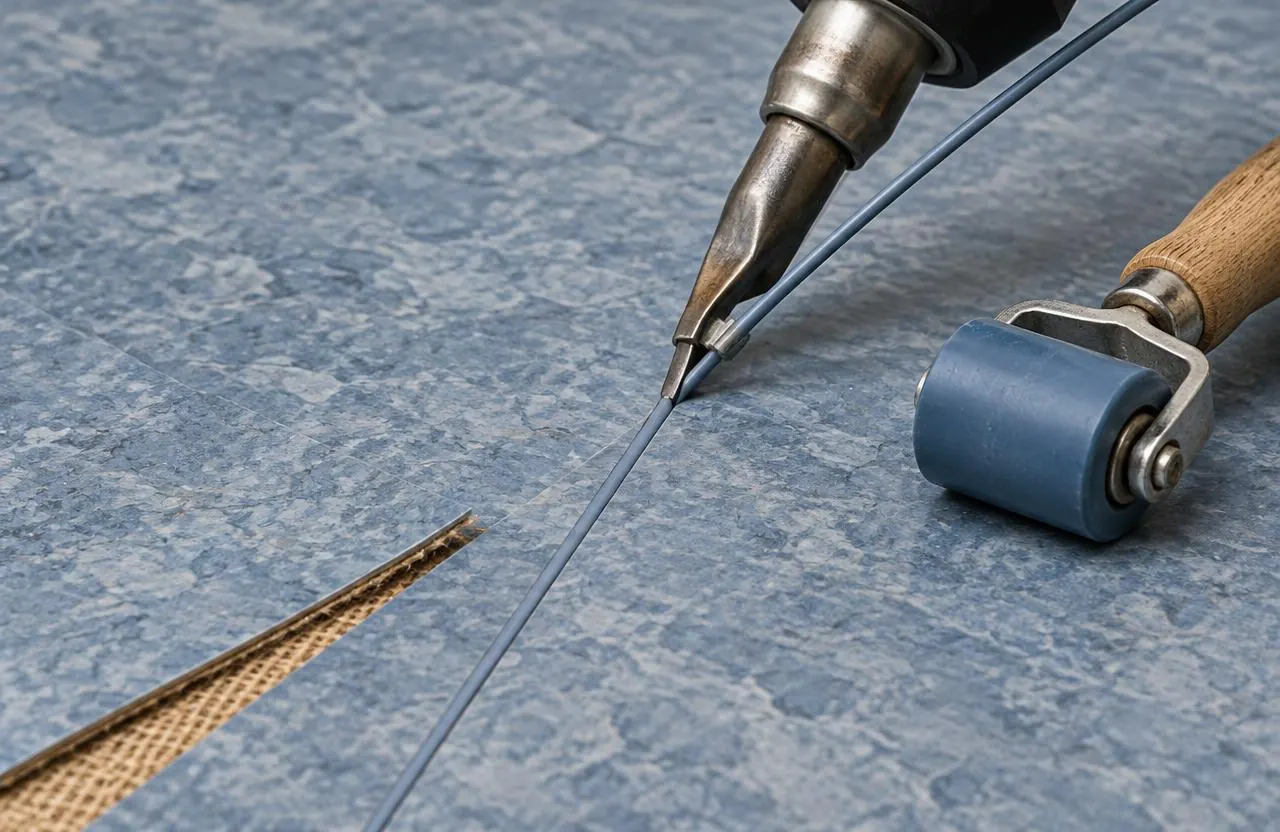
Sheet linoleum covers large areas with few seams and is fully adhered. Seams are either cut tight (often called net-fit) or heat-welded with a matching rod for hygiene or appearance; Forbo notes that welding is often not required, but may be specified for functional or regulatory reasons. Sheet work is a specialist installation that rewards an experienced installer.
Linoleum tiles are adhered and allow patterns and easier small-room installation. Click linoleum puts a linoleum surface on a core with a locking edge and floats like a laminate — faster, but with the moisture and wet-room limits of its core.
Substrate, moisture and flatness
Adhered linoleum telegraphs everything beneath it, so the subfloor has to be smooth, clean, sound and flat, typically with a patching or levelling compound. Over concrete — including many basements and ground-floor slabs — moisture and alkalinity are tested against the product and adhesive limits before installation. The manufacturer’s guide, not a general rule, sets those limits.
Removing an older floor first? Many “linoleum” floors in older homes are actually vinyl sheet or tile whose backing or adhesive may contain asbestos, so they are assessed before they are disturbed. Ontario’s asbestos regulation (O. Reg. 278/05, section 10) sets owner duties before alteration or repair work is arranged: material likely to be disturbed is examined unless its asbestos content is already known or the work is planned as though it contains asbestos. A qualified assessor can advise on testing or controls where needed.
Acclimation, adhesive and rolling
Linoleum and its adhesive are delivered and conditioned at the room temperatures the manufacturer specifies before installation. Sheet goods are often relaxed before cutting. Adhesive is applied with the specified trowel and open time, and the flooring is rolled to bond it fully.
Fresh linoleum can show a temporary yellowish cast from the manufacturing process, which fades with light exposure. Ask to see a sample that has been in light if colour matters.
Protection, cleaning and care
Many current linoleum products ship with a factory finish intended to be kept rather than stripped. Forbo, for example, describes its factory finish as designed not to be removed and advises cleaning with a neutral pH solution. Avoid high-alkaline strippers and excess water standing on seams.
Use felt pads on furniture, walk-off mats at entries and protect the floor during the rest of the renovation. The care routine is product-specific; your proposal should name the product so the right instructions apply.
What shapes linoleum flooring installation cost
Linoleum projects are priced on format and preparation.
- Removal of the old floor, and any asbestos assessment or controls it requires
- Subfloor preparation: patching, levelling and moisture testing
- Sheet, tile or click format and the room shapes involved
- Seam method: net-fit or heat-welded
- Cove base, transitions and thresholds
- Pattern work or inlaid borders
Common questions
What is linoleum flooring?
A resilient floor made largely from linseed oil, wood or cork flour and limestone on a jute backing. It is a different product from vinyl, even though old vinyl floors are often called “lino”.
How do you install linoleum flooring?
Sheet and tile linoleum are adhered over a smooth, flat, moisture-tested substrate with the product’s specified adhesive and rolled; click linoleum floats. Each follows its manufacturer’s installation guide.
How do you remove old linoleum flooring?
First confirm what it is. Older vinyl sheet and tile, and some adhesives, may contain asbestos, so they should be assessed before they are disturbed — tested, or handled as asbestos-containing, where required. Removal method then depends on the material and how it was bonded.
Can linoleum go in a basement or bathroom?
Sometimes, with a product approved for the conditions and a slab that passes moisture testing. Click linoleum on a fibreboard core is generally not suited to wet rooms.
Do linoleum seams need to be welded?
Not always. Tight-cut seams are common; heat welding is used where hygiene, appearance or a specification calls for it.
Is linoleum the same as Marmoleum?
Marmoleum is one manufacturer’s brand of linoleum. GCO installs linoleum products to their makers’ instructions; it is not a dealer for any brand.