
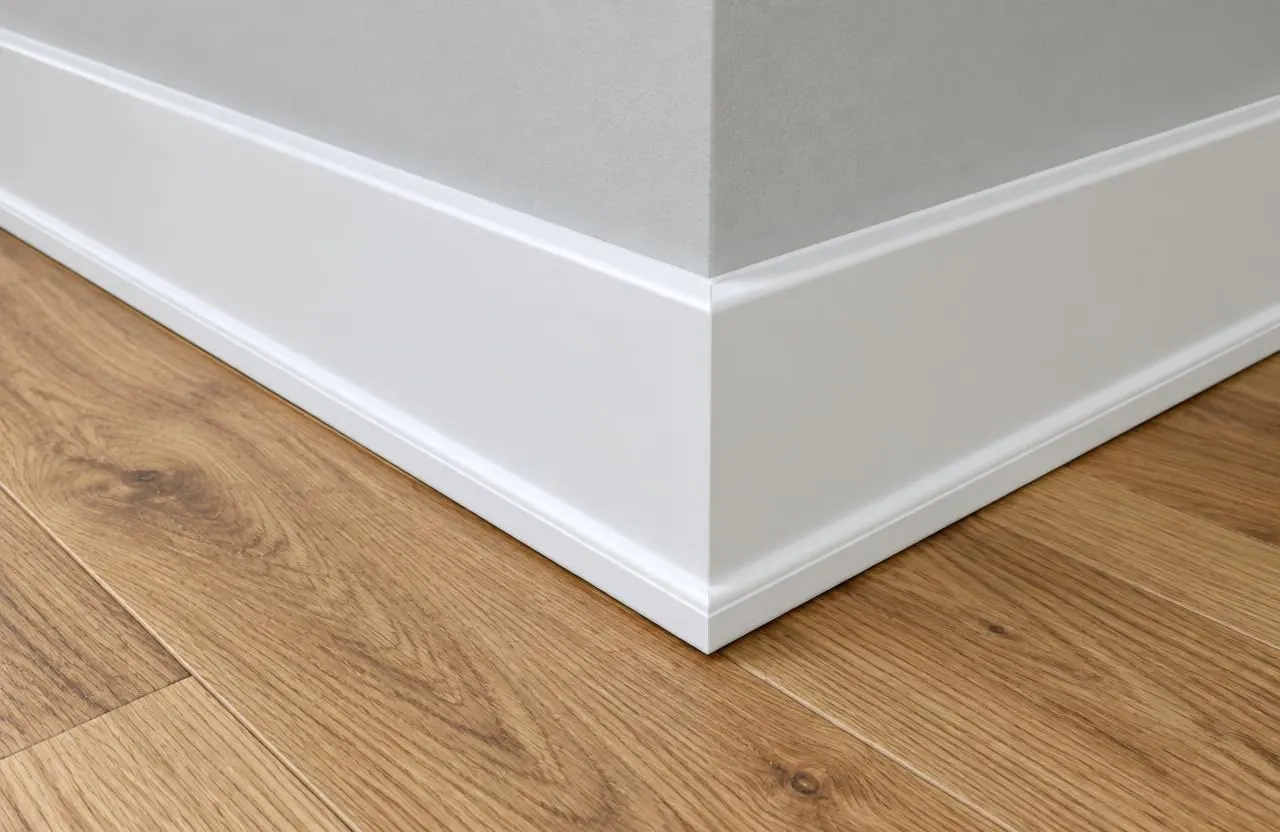
Why baseboards matter with new flooring
Most wood, laminate and floating vinyl floors need a gap at the walls so they can expand and contract. Baseboards and shoe moulding hide that gap while letting the floor move beneath them. Trim that is pinned tight to the floor, or nailed through it, can restrict movement and cause problems later.
Before or after the flooring?
The flooring type decides the order.
| Flooring | Baseboard timing | Why |
|---|---|---|
| Hardwood, engineered, laminate, floating vinyl | After the floor | Trim covers the expansion gap |
| Glue-down vinyl, tile | Usually after the floor | Trim sits on the finished surface for a clean line |
| Carpet | Before the carpet | Carpet is tucked under the baseboard, which sits slightly above the subfloor |
| Floor being refinished | Often left in place, protected | Or removed and reinstalled with shoe moulding replaced |
Profiles and heights
Taller, simpler baseboards suit many contemporary interiors; older Ottawa homes often have taller, more detailed profiles worth matching or reusing. Choose the height to suit ceiling height and door casings, and match the profile style across connected rooms.
MDF, wood or PVC?
Material affects durability, finish and where trim can go.
- MDF: smooth, stable and economical for painted trim; vulnerable to swelling if it gets wet
- Finger-jointed pine: paint-grade wood that holds fasteners well
- Solid hardwood or pine: for stained trim or matching older millwork
- PVC or composite: for basements, bathrooms and areas at risk of moisture
Shoe moulding and quarter round
A small shoe moulding or quarter round at the bottom of the baseboard covers gaps where floors are uneven and adds space for floor movement. It is nailed to the baseboard, not the floor, so the floor can move freely. Some clean, modern details skip it by scribing the baseboard to the floor — that requires a floor flat enough to allow it.
Corners, scribing and uneven walls
Outside corners are mitred; inside corners are often coped — one piece cut to the profile of the other — so the joint stays tight as the house moves seasonally. In older homes, walls and floors are rarely straight, and trim may need to be scribed to follow the floor and shimmed or caulked at the wall.
Fastening, caulking and painting
Baseboards are nailed into wall studs and the bottom plate rather than the drywall alone. Nail holes are filled, the top edge is caulked to the wall and the trim painted or finished. Pre-priming or pre-finishing before installation reduces on-site painting time.
Baseboards are not baseboard heaters
Searches for baseboard installation often include electric baseboard heaters. Those are electrical heating units, not trim, and installing or relocating them is electrical work for a licensed electrical contractor with ESA oversight. If heaters are in the way of new trim, that coordination is planned separately.
What shapes baseboard installation cost
Trim is priced by length and complexity.
- Linear length and number of rooms
- Profile, height and material
- Number of corners, returns and door casings
- Removal of old trim and wall repair
- Scribing to uneven floors and walls
- Painting or finishing on site
Common questions
Should baseboards be installed before or after flooring?
After hardwood, laminate, vinyl and tile; before carpet. With wood and floating floors, the baseboard covers the expansion gap.
Is MDF or wood baseboard better?
MDF is smooth and economical for painted trim but swells if it gets wet. Wood holds fasteners well and suits stained trim. PVC suits moisture-prone areas.
Do I need shoe moulding?
It helps on uneven floors and covers the expansion gap. A clean baseboard-only look is possible where the floor is flat enough to scribe the trim.
Can my existing baseboards be reused?
Often, if they are removed carefully. Older profiles are worth reusing when they are difficult to match.
How are baseboards attached?
They are nailed into wall studs and the bottom plate, not just drywall, and nailed so the floor beneath can still move.
Can you install baseboard heaters?
Electric baseboard heaters are electrical work for a licensed electrical contractor. GCO can coordinate that work alongside trim and flooring.